

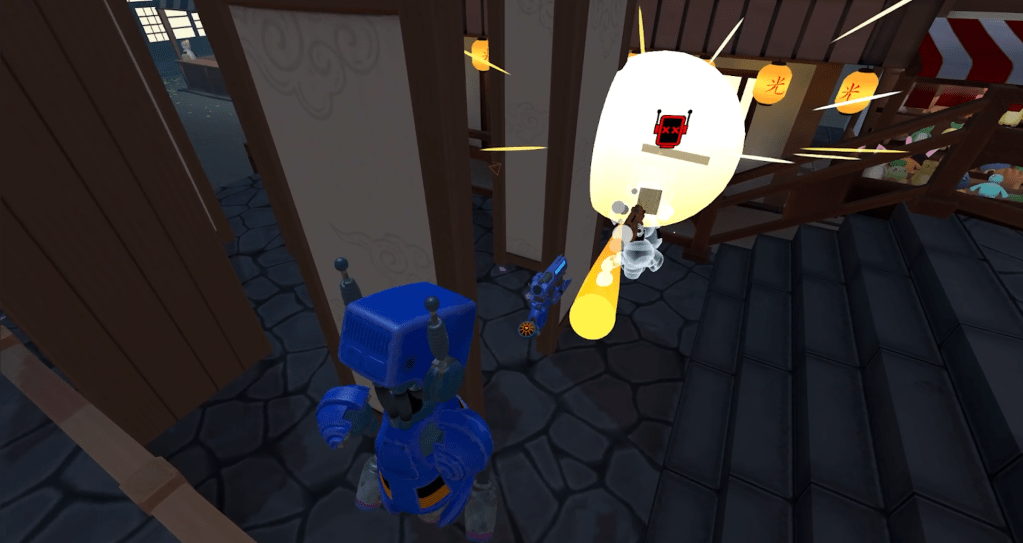
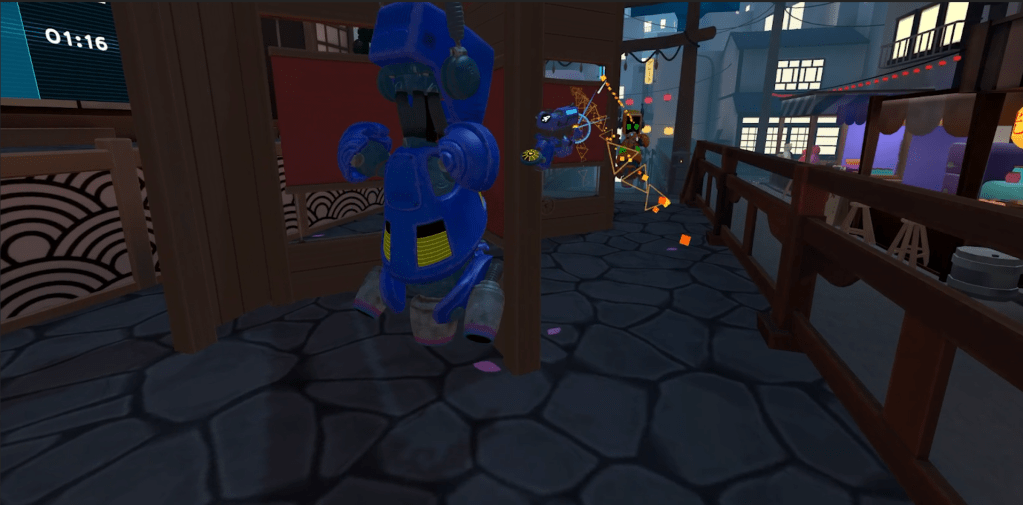
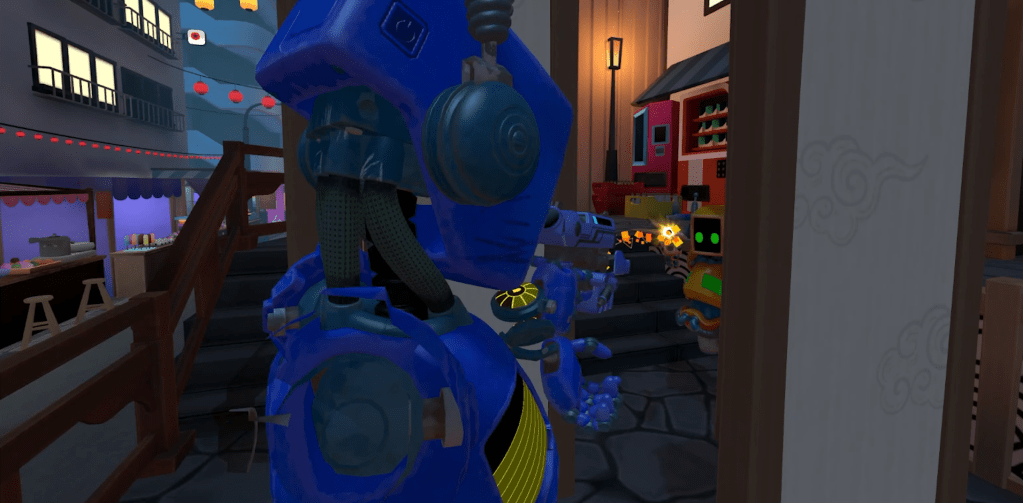
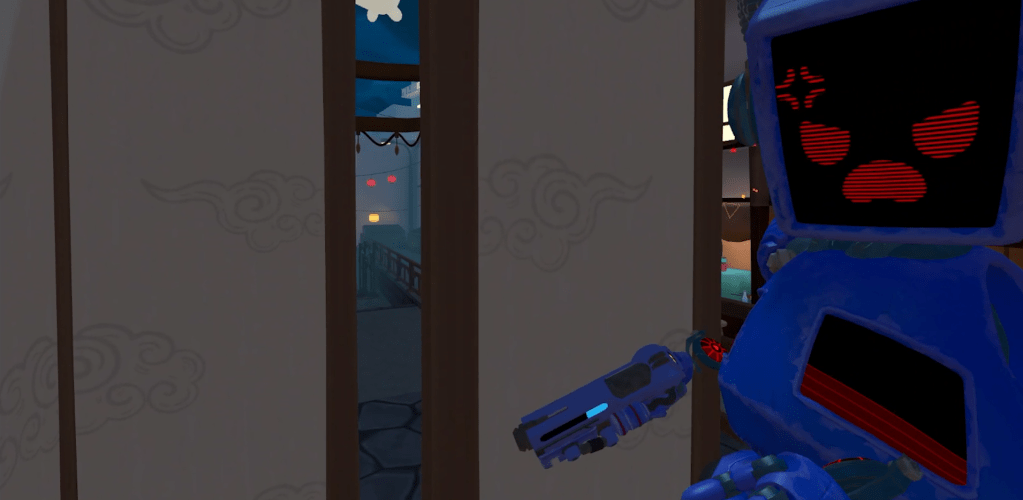
About this project: A competitive VR LaserTag game between two robots who enter a fighting simulation. Players play against each other in a physical space but they experience the battle in VR (using Quest 2 headsets, the calibration was made using Meta’s Spatial Anchors). This project was targeting Escape Rooms and entertainment venues and was developed as a multiplayer experience using Photon, before implementing a local solution. Apart from the two players, there is also a third client, the Game Master who enters the game from PC, and is responsible for registering the names of the players, load them in the experience, connect them back in the game in case any one disconnects without losing the progress in the game and generally be in charge of basic game functionalities such as: pausing the game, restarting it, ending a session. The screen of the Game Master also serves as a Spectator Screen, for other players outside the game to be able to watch their friends who play.
About my role: I was the lead designer of the project. I was responsible for the full Game Flow (link below), the tasks involved and the communication between all departments. Made a lot of use of Unity’s timelines to create in-game Screen UI’s that showed the score and info throughout the game, as well as the whole Game Master’s interface.
Throughout the development we held 2 cycles of playtesting, the 1st cycle also involving A/B testing, making iterations based on data analytics.






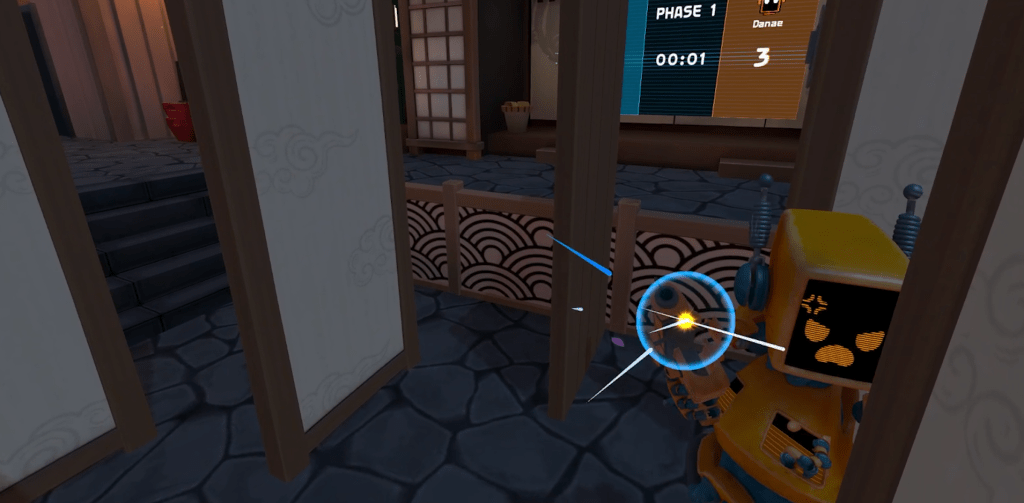
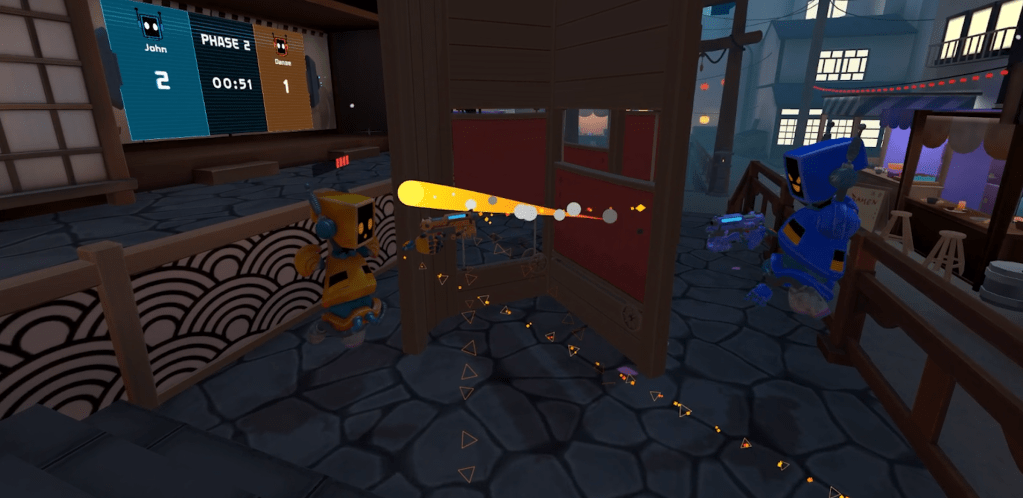


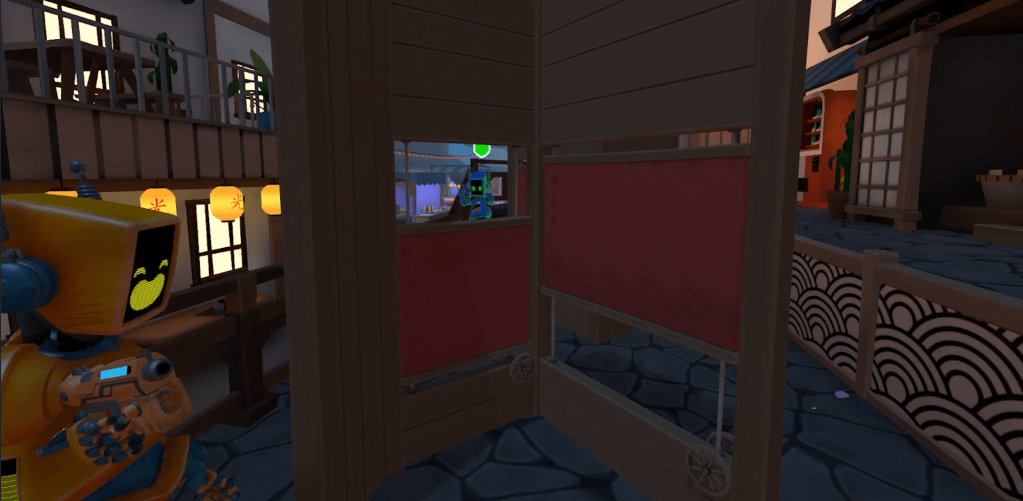
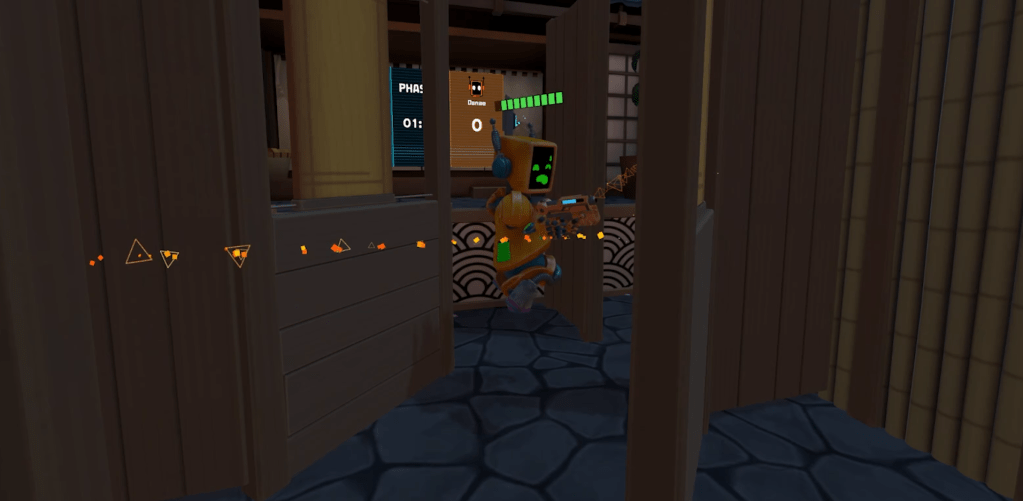

Application Game Flow
https://app.milanote.com/1QsiJC1UjTAG5G/lasertagvr
Game – Game Flow
https://app.milanote.com/1QsiJK1VRl76oU/game-flow
Playtest Results (Cycle 1: A/B testing)
In Cycle 1 we had 6 different obstacle levels (3 on A testing and 3 on B testing), where we wanted to pick the best 3 (1 for each of the 3 rounds). They playtest happened within a whiteboxed environment and we wanted to see how all the game elements played out in their very basic visual form.
(Legend meanings->blue: Not at all/Strongly Disagree, red: Very little/Disagree, orange: Neutral/Neither agree nor disagree, green: Much / Agree, purple: Very Much/ Strongly Agree)
PS: The questionnaires were originally held in Greek, so Google’s translate might not be accurate in some questions.
Playtest Results (Cycle 2)
In this playtest the players would experience the final polished environment and all improvements in gameplay from Playtest 1. Playtest 2 happened 6 months after Playtest 1. We had more kids on the second playtest, and the questions were also focused on the lobby-training area as well as the overall aesthetics. The game was clearly improved.

 Elli Koliniati